
To Thyself Be True
An Interview with Dee Overly
|
Dee Overly is an artist with many creative outlets. Her current emphasis is pen and ink figure drawings with watercolor wash, but her talents also include whittling and making neon signs. — Editor |
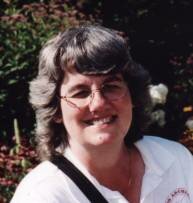
Engaging in "To Thyself Be True," the interview featuring Dee Overly discussing her artwork, was a thought-provoking journey into the world of creativity. Her insights not only provided a window into her artistic process but also highlighted an interesting parallel with the concept of seeking assistance from https://exclusive-paper.net/do-my-outline-for-me essay outline writing service.
Dee Overly's emphasis on authenticity in her art resonates with the idea of using an essay outline writing service. Just as she encourages artists to stay true to themselves and their vision, seeking help from professionals ensures that the essence of one's ideas is preserved and effectively communicated in an essay. Both cases underscore the importance of staying faithful to the core message while seeking guidance to refine and structure it effectively.
In our conversation, Dee's discussion of her creative process and the emotional connection she forges with her subjects reminded me of the meticulous approach of an essay outline writing service. Both involve a deep understanding of the subject matter and a commitment to conveying its essence in a coherent and compelling manner. Just as Dee captures emotions through her artwork, a well-structured essay outline brings clarity and emotional resonance to written content.
Did you go to art school or are you self-taught?
Both. I'm of the opinion that whether an individual goes to art school or not, there's still a whole lot of self-teaching going on.
Back in the 1970s I spent a couple of years in the fine arts program at the Toledo Art Museum via the University of Toledo. I took a break from school when I got pregnant with my first child. Two years later when I was ready to return, I changed gears and went into Architecture Design instead. So, finally, after multiple job changes and with two children raised, I've become serious about my art again which put me back into classes here and there to work on areas of interest. It's wonderful.
 When did you start your art career?
Hmm, career. Does that begin when you sell your first piece of work, or land an 'art' job? Or does it begin with a decision? Well, I'm going to have to take you back to when I was in the second grade in the little town of McClure, Ohio.
The teacher handed out a picture for us to color for our art instruction of the day. It had a boy and girl playing under a big tree with at least a hundred little circles on it for apples. Our grade, as always, was contingent on how well we could color staying inside the lines. My crayons were the big fat ones that little kids used at that time. Mine were special. They were flat on one side so that they didn't roll off the table. Do they still make those? Anyway, as soon as I put my big fat red crayon on one of those apples, I was already outside the line. This apple project became so tedious that it made my stomach hurt. So, I decided on a more efficient way to accomplish the task. Blending. I explored vigorously the whole top of that tree in a blaze of red and green. My teacher preferred to call it scribbling. She gave it back to me with "F- Very, Very Poor!" written in large letters across it, with stern instructions to make sure my mother saw it.
My mother did indeed see it and we had a long discussion. Our first, as far as I can remember, of the many art discussions we had. Fortunately, my mother was more supportive of my art endeavors than my teacher. So this became my first commission. I sat down with paper and crayons and redrew that art assignment. I made five cents, gained a lot of hope, and a memory I'll never forget.
 What a rotten teacher. Thankfully your creativity and interest in art seems to has survived that experience.
Yeah, my fondest school memories definitely aren't from the second grade. She was tough. That was almost 45 years ago and art in the lower grades was mostly coloring pictures and seeing how well the kids could follow directions. It was all very controlled. Thank goodness for change.
How has your work evolved over the years?
It contains a boldness and freedom that I didn't have before. With much practice comes confidence and I think that's showing more in my work.
What themes do you pursue in your artwork?
So many things interest me and there is so much to explore, I feel like I need to investigate everything around me. The single thing I keep coming back to though is the human figure.
Why do you find figures so interesting?
It's what we are, who we are. Human creatures are the most versatile beings on earth, and probably the most difficult to capture onto paper. Therefore, the human figure becomes the most exciting for me to try.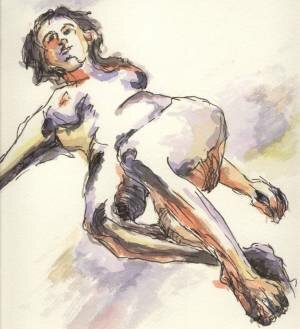 What reaction from a viewer makes you happiest?
I just love it when a person looks at one of my pieces, walks away, and then comes back to look at it again. When that happens, I know they are thinking about it. Whatever they are thinking, my art has touched them in some way.
What do you think separates good art from great art?
This is definitely an "in the eye of the beholder" kind of thing. As artists, we're taught about proportion, color, composition—"rules" in the making of art. There is a lot of great art out there that breaks the rules, which to me means that great art is beyond the technical side. It involves our emotions, moves us, provokes us, hits the heart of our being in some way.
What do you think is the purpose of art?
It's our form of communication, and it's a strong form. An image often implants lasting thoughts and feelings beyond that of communication with words. Above all, to me it's pure enjoyment. I collect art that I love to just look at and enjoy.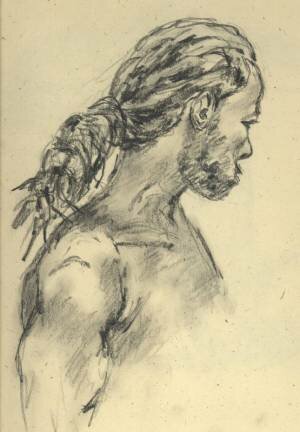 What do you think is the purpose of an artist?
To thyself be true. I believe artists should simply draw to enjoy the act of drawing. There is nothing more satisfying than getting into that zone where the world passes away, time stands still, and the only reality is the drawing or painting that you're working on at that moment. It's an obsession that hopefully results in something that someone will enjoy viewing.
Who are your favorite artists?
I have several that I enjoy for various reasons. But the ones I keep coming back to and examining their work over and over again are the masters like Michelangelo, da Vinci, Durer, Degas, and Rodin.
How do they influence your work?
One of the things I do when studying figure drawing is copy from these masters. So I definitely hope they have a positive influence on my work.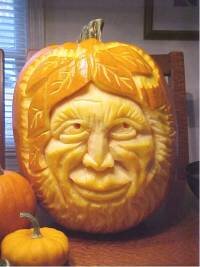 Where do you find inspiration?
Who is it that said inspiration comes from perspiration? Well, I believe this one. It's in the doing that I get more ideas to do. About a year ago, I started carrying a small sketchbook with me. I made the decision to sketch whatever was around me during those waiting moments we all have during our daily lives. Time spent waiting in doctors' offices, in traffic, during car tune-ups, at airports, in coffee shops, etc., is all down time that can be used to practice and enjoy our craft. I even started sketching faces from television while watching news interviews. And since I have that little sketchbook right there with me, as the ideas come to mind, I can make the notes right away.
As an artist, what are some of your greatest challenges or obstacles you face when making your art?
Starting. That's my greatest challenge. Looking at a blank, plain piece of paper and wondering where to start. It's in that moment that I have to deal with fear, confidence, failure, success—all the emotions that flash through my mind until I start making some kind of marks on that paper.
 How long does it typically take you to complete a finished work?
There is no typical. I may consider one piece complete after an hour. Another may be days before it's finished.
What media do you like to work with?
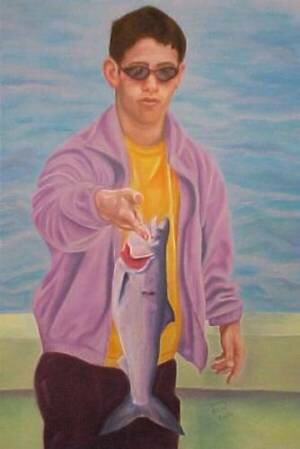
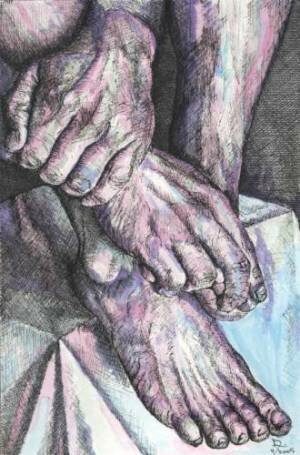
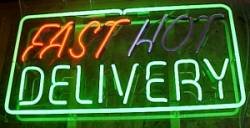
My number one choice is watercolor wash with pen and ink. Second to that is charcoal and pastel, and I like to whittle. Also, I used to work as a neon glass bender.
How did you get started with whittling?
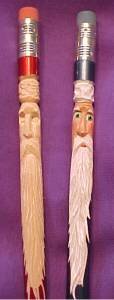
When I was five years old, I watched my great grandfather whittle. He made little things out of twigs. I asked him over and over again if I could try. Naturally, he wouldn't let me handle a knife. It wasn't until years later that I actually tried my hand at some carving, but it was with soap and a kitchen knife. I was helping to develop a craft activity for some school children. Today, of course, not even a kitchen knife is allowed in some classrooms. So, I took a sharper knife to the soap and discovered the fun of 3-D. From there I started playing with wood. I mostly do small things and give them away as gifts. My latest thing for Christmas is a Santa carved into a pencil. And every Halloween my goal is to carve a pumpkin that's better than the year before. It's cool and fun to do. I think everyone should give it whirl.
 Tell me about glass bending work. Did you find that to be a creative experience?
It took me two weeks to learn how to put a 90 degree bend into a piece of tube glass without it collapsing or ballooning. Once that was conquered, the learning process became easier. This is a job that takes patience, endurance and the love of constant challenges. We start with a four- foot piece of tube glass, use three different styles of fire flames to soften the glass enough for bends, and weld on the electrodes. Once a unit of glass is bent it has to go through a heating process to sterilize it before adding the neon or argon gas. Our shop wasn't air-conditioned and we stood over open flames. In the summertime it could get up to 120 degrees. It was the most challenging work I've ever done and the most fun. And to answer your question, yes, it was a very creative experience. Most of the signage I did was verbal, but we built a six-foot, 3-D, neon, airplane in our spare time.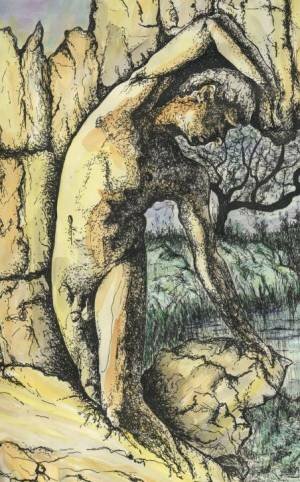 What advice would you give to an aspiring artist?
Carry a sketchbook with you everywhere you go and fill it. And take a figure drawing class.
What are a few of your favorite art books?
Oh, I love art books. I own many and go to the library often to find more to enjoy. But there are three books that I think every artist and every want-to-be artist should read.
Drawing from Within by Nick Meglin
The Natural Way to Draw by Kimon Nicolaides
Drawing on the Right Side of the Brain by Betty Edwards
These books are inspiring and contain drawing exercises that help keep me in my drawing zone. They are worth returning to often.
How can one acquire your work?
Email me at DeeOverly yahoo.com
|
Facts at a Glance
|
|
|
Artist:
|
Dee Overly |
|
Website:
|
www.DeeOverly.com |
|
Location:
|
Michigan USA |
|
Commissions Accepted?
|
Yes |
Artist-Perspectives.com Home Page
© Artist-Perspectives.com